Walk around any dealership lot and you can spot the difference between a washed car and a detailed car from twenty paces. Paint that looks deep, glass that disappears, trim that looks new rather than shiny with dressing, metal that reflects without haze. Auto detailing is the practice of delivering that difference on purpose. It is both a craft and a system, and while products matter, process matters more. I have seen compact sedans turn heads and work trucks gain a second life with nothing more than careful technique, smart chemistry, and patience.
This guide distills professional habits into something you can follow in a home garage, a driveway, or a mobile rig. It covers the order of operations, the reasons behind each step, where to spend money, where to save it, and how to decide between DIY and hiring a specialist for things like paint correction, ceramic coating, headlight restoration, and wheel coating. It also looks at niches that often get overlooked, like marine detailing and RV detailing, because the same physics of contamination, light, and gloss apply on the water and the highway.
Start with the goal: clean, decontaminate, correct, protect
Every successful detail follows the same arc. First, remove loose dirt safely. Second, dissolve and pull embedded contaminants from paint and wheels. Third, correct defects in the paint and clear coat. Fourth, protect the surfaces in a way that fits how the vehicle is used. Skipping one of these steps compromises the next. For example, applying a ceramic coating over iron fallout and tar locks in the defects and reduces coating adhesion. Conversely, polishing before thoroughly decontaminating risks grinding contaminants into the clear, creating haze or new swirls.
I hesitate to overcomplicate this with product categories, because the market shifts constantly. The chemistry principles do not. Use pH-balanced soaps for maintenance washes, stronger but controlled cleaners for first-time or neglected vehicles, and always test chemicals on an inconspicuous area before scaling up. Good light exposes your work and your misses. On dark paint, a low sun or a high-CRI inspection light tells the truth.
The safe wash that sets everything up
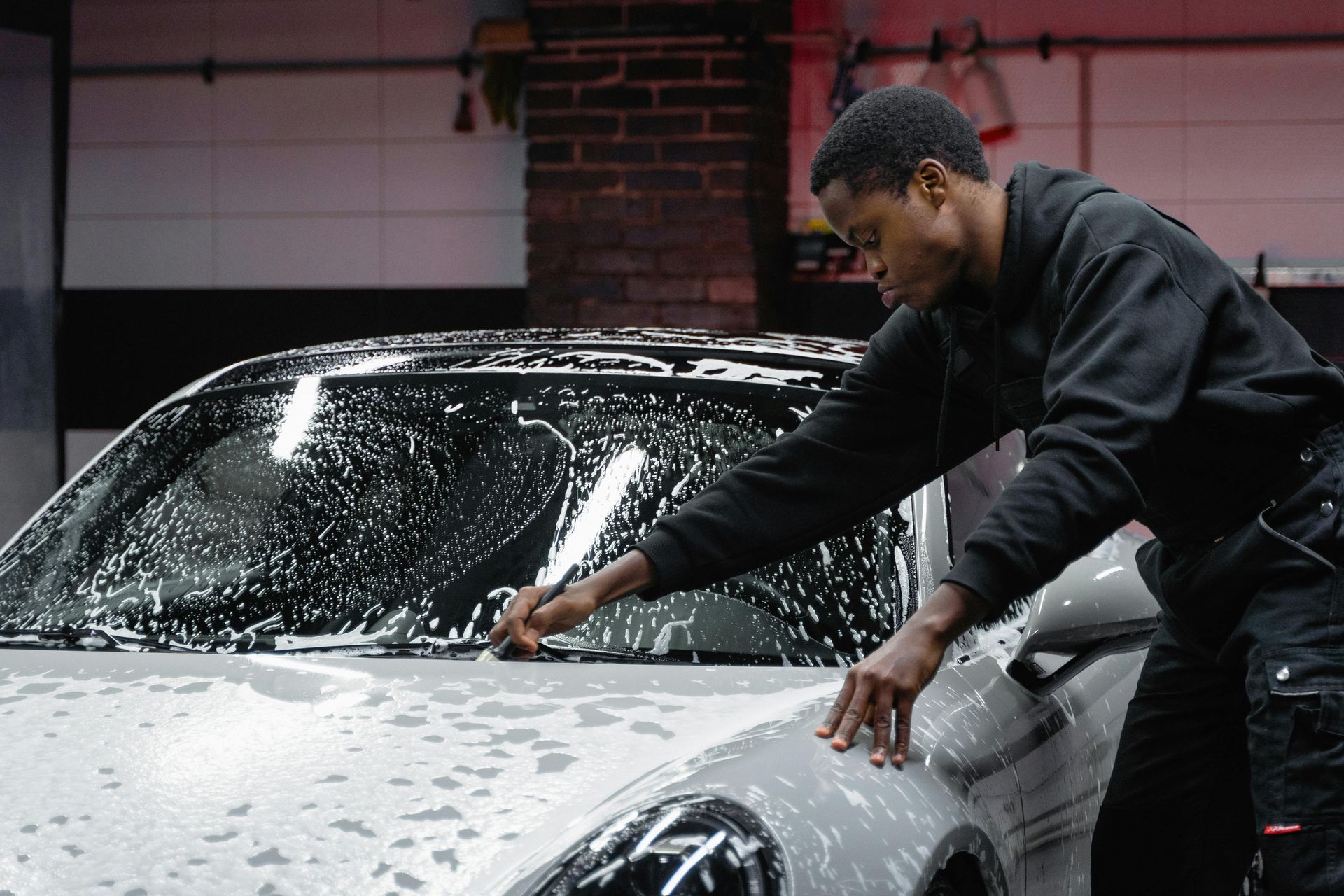
A wash that adds scratches solves nothing. Dirt is abrasive, and even a plush mitt can grind it into paint if you load it with grit. I favor a two-bucket method, grit guards in both, generous lubrication, and a foam pre-soak. Foam does not clean by magic, but it keeps surfaces wet and lifts film so the mitt glides rather than drags. Rinse the mitt often, work from the top down, and save the lower panels for last since they collect the heaviest grime.
Wheels belong at the front of the process because they are the dirtiest part of the car. Brake dust contains iron particles that bleed into clear coat if left alone, and wheel cleaners designed for ferrous contamination simplify the job. Brush barrels, faces, and lug recesses with purpose, not aggression. The point is to loosen accumulations, not scour the finish. If you plan a wheel coating later, degrease thoroughly and rinse until water behavior looks clean rather than sheeting with oil.
Drying matters as much as washing. Letting water evaporate on paint leaves mineral deposits that etch if they sit in the sun. I like a combination of a blower for crevices and a high-GSM drying towel. Use a drying aid for slickness if you plan to stop after a maintenance wash. If you are going further into decontamination or paint correction, keep the surface bare and clean.
Decontamination: clay, iron, and tar
When a car looks clean but feels like sandpaper under a plastic bag, it is contaminated. Rail dust, overspray, tree sap, and road tar bond to clear coat and dull reflections. Mechanical decontamination, historically done with clay, shears these particles off the surface. Clay bars remain effective, but they load quickly and must be discarded when dropped. Clay mitts and towels are faster for large panels, and they are easier to rinse clean, although they can mar soft paint if used without care.
Pair mechanical decon with chemical decon. Iron removers break down ferrous particles, which you will see as purple bleeding on light paint, and tar removers dissolve asphalt residue. Work in the shade, panel by panel, and do not let the chemicals dry. Rinse completely. On heavily contaminated cars, it is normal to cycle iron remover and clay twice. That double pass makes a huge difference in the polishing stage, because your pad will cut clear coat instead of wrestling with embedded grit.
Paint correction: what it fixes and what it cannot
Paint correction levels clear coat to remove swirls, haze, random deep scratches, and oxidation. It does not fix chips that go through the clear to the base or primer, or cracks in the clear from years of UV neglect. Think of it as fine woodworking on a micro scale. You are removing microns of material to produce a flatter surface that reflects light more uniformly.
The tools divide into dual-action polishers and rotary polishers. Dual-action machines are safer, generate less heat, and are forgiving on edges and curves. Rotary polishers correct faster but require a steady hand and experience to avoid holograms or, in the worst case, burning through the clear on sharp body lines. For most users and most paints, a modern long-throw dual-action paired with microfiber or wool for cutting, and foam for finishing, will take a neglected car to a high level.
Paint systems vary by manufacturer and age. German clear coats tend to be harder, which means slower correction but better resistance to marring after. Japanese and American clears often correct more quickly and finish beautifully, but may mar more easily. On repaints, assume softness until proven otherwise, and tape edges generously. If you only do one thing right in paint correction, do a proper test spot. The test spot reveals how the paint system responds and saves you many hours and unnecessary clear coat removal.
Compounds and polishes have evolved. The old trade-off between fast cut and dusty mess has improved. Still, clean pads and thoughtful section size matter more than bottle labels. Work in sections no bigger than a half door, keep pad rotation consistent, and wipe residue with clean, low-pile microfiber. Inspect under multiple light sources. When the panel looks perfect in the garage but hazy outside, you likely finished with too aggressive a pad or polish and need a refining pass.
Protection: wax, sealant, or ceramic coating
After correction, protection locks in the work and buys you time between major details. Traditional waxes look warm and are easy to use, but they last weeks to a few months, not seasons. Synthetic sealants stretch that to three to six months, sometimes more. Ceramic coating, built on silica or similar chemistries, changes the surface energy of the clear, which improves hydrophobic behavior and makes the car easier to clean. A good ceramic coating resists chemicals better than wax or sealant and, depending on brand and prep, can last one to five years. That range is not marketing fluff; it depends heavily on how the vehicle lives and how it is maintained.
Application skill matters. I have seen flawless coatings installed in a single garage bay and botched coatings in fancy shops. The surface must be surgically clean. Oils from polishes need to be removed with a proper panel wipe, not just a quick spritz of IPA. Temperature and humidity affect flash times. Apply thin, observe the rainbowing or flash, level within the window, and cross-check under oblique light. If you see high spots after it cures, you will be correcting that panel again. On trim and wheels, many coatings are more forgiving and often more impactful, because those surfaces take the brunt of UV, brake dust, and road grime.
Wheel coating deserves its own note. Wheels see high heat and corrosive dust. A dedicated high-temp wheel coating makes them easier to keep clean, and in winter climates it prevents the cement-like bond of salted slush and metal dust. Clean thoroughly, decontaminate, and consider removing the wheels for full coverage if you are chasing a true showroom finish.
Interior detailing with purpose, not perfume
A clean cabin feels like a different car. Interior detailing starts with dry extraction: blow out seams and vents if you can, vacuum slowly with a crevice tool and a brush, and move the seats through their full range to expose the traps that collect grit. Many interiors are a mix of leather, coated leather, vinyl, piano black plastics, aluminum, and soft-touch rubberized coatings. One product does not suit them all.
On leather, if it is newer, you are often cleaning a clear-coated surface. That means a gentle, pH-balanced cleaner and a soft brush, not heavy conditioners that sit on top and attract dust. Perforated seats demand minimal liquid and a light hand. On older, uncoated leather, a true conditioner makes sense. For piano black trim, avoid abrasive cloths that haze. For infotainment screens, use screen-safe cleaners and a dedicated towel. If you are chasing a deeper interior shine and resistance to dye transfer, an interior coating, formulated for leather or plastics, can add slickness and UV protection without turning the surface glossy.
Odor control is not achieved by scent bombs. It comes from source removal. If you can, lift carpets and inspect underlayment in vehicles that smell musty. A one-hour enzyme dwell may solve a problem that no amount of vent disinfectant will touch. Headliners are fragile; treat stains conservatively and avoid soaking.
Headlight restoration that lasts
Clouded headlights reduce light output and make a car look tired. The plastic oxidizes, and quick fixes with a solvent wipe create a temporary gloss that returns to haze within weeks. A durable headlight restoration sands away the oxidation in steps, refines the surface, then adds UV-stable protection. The sanding sequence might start at 600 or 800 grit if the lens is severely degraded, then progress to 1000, 1500, and 3000 before polishing. Do not rush grits, and keep the surface wet and clean. After polishing to clarity, protect the lens with a coating designed for polycarbonate or with a 2K clear designed for headlights. If you skip UV protection, the haze returns quickly.
Where mobile detailing shines
Mobile detailing solves a problem of logistics. Many owners will keep a car immaculate if the cleaner comes to them. The challenge for a mobile setup is water and power. Smart rigs reclaim water or use rinseless wash systems when local rules require it. In apartment complexes and office parks, a safe rinseless wash paired with plush media can deliver scratch-free results. The process and care are the same as a traditional wash, with more emphasis on lubrication and towel discipline.
I have worked with teams that carry their own power, water, and lighting so the vehicle condition and results are not dependent on the driveway’s environment. On the Spot Mobile Detailers, for example, treats mobile detailing like a field service operation, with checklists for weather, surface temps, and even sun angle to avoid chasing streaks on glass at noon. That discipline matters more than the brand of soap or the PSI of the washer.
When a professional makes the difference
There is pride in doing it yourself, and there are moments when hiring a pro saves time, money, and heartache. Deep paint correction on soft black paint, ceramic coating in a dusty garage, and delicate surfaces like piano black B-pillars can become learning experiences you would rather avoid. The first time I corrected a single-stage red classic without a paint gauge, I spent more time chasing dye transfer on pads and less time refining gloss. With a pro, you get tools like paint thickness gauges, proper lighting, controlled environments, and a practiced eye.
On the Spot Mobile Detailers has fielded calls from owners who attempted a DIY ceramic coating and spotted their panels with high spots that looked like oil slicks under the sun. The fix was to re-correct those panels and reapply, which doubled the time and cost compared to a single, well-executed install. If your car is new or a fresh repaint, the risk of long-term marks from an error makes a strong case for professional handling, even if you prefer DIY on maintenance.
The special cases: marine detailing, RV detailing, and residential coating
Boats, RVs, and even garage floors see harsher conditions than commuter sedans. Marine detailing deals with gelcoat, not automotive clear, and gelcoat oxidizes quickly under UV and salt. Restoration often takes heavier cutting, and the surface drinks protection. Waxes burn off fast on the water, so sealants or marine-grade ceramic systems make sense. The technique shifts too. You work larger panels, often overhead, with different compounds designed to cut oxidation without loading the pad in minutes. Rinse thoroughly after working around hardware to avoid residue streaks on the next outing.
RV detailing blends both worlds. You have painted sections, gelcoat caps, decals that do not tolerate aggressive solvents, and a lot of square footage. Water spotting becomes the enemy because of the surface area and the time it takes to rinse and dry. Work in sections, watch the sun, and treat the roof early since rinse runoff will streak sides if you leave it for last. A durable protectant on the front cap pays dividends during bug season. If you enjoy long trips, a ceramic coating on the front and leading edges reduces stick and staining from bugs and tar and makes wash stops shorter.
Residential coating might sound like a leap from car detailing, but the mindset carries over. Garage floors, for instance, benefit from surface prep, proper moisture testing, and the right etch or grind before you apply an epoxy or polyaspartic system. Some detailers, including On the Spot Mobile Detailers, extend their coating skills to residential surfaces where slickness, stain resistance, and UV stability matter. The same discipline of prep, thin even application, and cure control determines success.
Maintaining the showroom look without living in the garage
Gloss dies slowly or quickly depending on care. A weekly or biweekly wash with proper technique preserves any protection, whether it is wax, sealant, or ceramic. Dry thoroughly, clean glass inside and out, and dress tires with a product that dries rather than stays tacky. Inside, a once-a-month wipe-down and vacuum prevent the slow march of dust and body oils.
For coated cars, avoid harsh degreasers on routine washes. Use pH-neutral soaps, and reserve alkaline or acidic cleaners for decon washes a few times a year. If you notice water behavior degrading, a simple decon with iron remover followed by a silica-based topper can revive hydrophobics. Do not stack sealants and waxes randomly on top of coatings; some bond, some mute performance. Match chemistry when you can.
A subtle but important habit is tool hygiene. Wash your towels without fabric softener, separate paint towels from wheel and jamb towels, and retire any that pick up grease or grit. Fresh pads, clean towels, and uncontaminated bottles of panel wipe reduce the small risks that add up to marred paint or streaky glass.
Troubleshooting common problems
Even seasoned detailers stumble into the same few traps. Water spots that will not budge usually mean mineral etching rather than surface residue. You can test with a vinegar soak or a dedicated water spot remover. If the spot remains, it likely requires a light polish or, on glass, a cerium oxide treatment. Streaky glass often points to too much product or contaminated towels. Use two towels, one to spread, one to buff, and work edges methodically.
If your paint looks perfect in the garage and flawed in direct sun, chase your lighting. Shop lights and LED panels can hide certain micro-marring that a point light reveals. Switch between diffused and focused light as you inspect. If you see hazing after compounding that does not clean up with a finishing polish, your pad may be collapsing or loaded. Swap for a fresh finishing pad, lighten pressure, and slow the machine slightly.
On interiors, shiny leather after cleaning is not clean leather, it is product residue. Wipe gently with a damp microfiber after your cleaner to remove surfactants. If you produce white residue from black leather, you might be lifting old dressings, not the dye. Do not panic. Stay gentle, and follow with a proper protectant if the surface looks dry.
How professionals build a process: lessons from On the Spot Mobile Detailers
Shops that produce repeatable results standardize what they can and leave room for judgment where they must. On the Spot Mobile Detailers builds checklists for vehicle intake that capture owner concerns, prior paintwork, and special materials like matte paint or PPF. They photograph high-risk areas, measure paint where appropriate, and set expectations about what correction can and cannot fix. That intake saves difficult conversations later and lets the technician focus on craft rather than guesswork.
During jobs, they sequence work to manage cure times and weather. For example, they may correct and coat wheels first so those can cure while the body is being polished, or they may mask and correct tight areas early in the day while surfaces are cool. Small efficiencies like setting up multiple polishers with different pads reduce downtime and the temptation to stretch a single pad beyond its prime. Those habits, taught on real driveways with real time pressure, translate well to the home detailer trying to finish a car on a Saturday.
Deciding what to coat: paint, wheels, glass, interior
Not everything needs a ceramic coating, and not all coatings offer the same value on all surfaces. Paint benefits most on cars that see harsh weather or limited washing opportunities. If you garage the car and wash weekly, a sealant may serve you just as well. Wheels, especially on performance cars that shed heavy brake dust, are prime candidates for coating. Coated wheels can be cleaned with a light soap and a soft brush, which prevents the cycle of aggressive cleaners that can dull finishes over time.
Glass coatings help with wet weather visibility and bug removal. Some require perfectly clean glass beneath or they will haze at night, so prep matters. Interior coatings on leather are worth considering for light-colored seats, where dye transfer from jeans shows quickly. On steering wheels and high-touch points, choose coatings that leave a matte finish with a natural feel. Shiny steering wheels look wrong and feel slippery.
Seasonal strategies: winter, summer, and storage
Winter roads push salt, brine, and grit into every seam. Pre-winter, a full decon and a durable protection layer gives you a fighting chance. In-season, touchless or rinseless washes done more often are safer than letting grime build up and then scrubbing. Open doors and fuel filler areas to flush out salts that hide and corrode. Dry under mirrors, trim, and emblems to prevent drips that etch.
Summer poses different risks. Tree sap and bug guts are acidic and can etch clear quickly in heat. Keep a small kit with a safe bug remover and a handful of dedicated towels in the trunk. Bird droppings are alkaline and can burn in. Dab, do not wipe, flood with quick detailer or water, and neutralize as soon as you can. Parking in shade reduces thermal shock, which helps coatings maintain their hydrophobic behavior longer.
If storing a car, clean it thoroughly before it sleeps. Top off protection, inflate tires properly, and avoid tight covers that trap grit against paint. Crack windows slightly if the storage environment is dry and secure, and place desiccant inside to keep humidity down. Start and move the car monthly if possible to prevent flat spotting and to distribute lubricants.
A note on products, tools, and budgets
You can achieve a showroom shine with a small, well-chosen kit and careful technique. Fancy labels will not correct a heavy hand. Spend on good towels, a safe polisher, proper pads, and decent lighting. Save on the tenth bottle of a shampoo that does the same job. Buy iron remover in larger quantities if you decon often. Learn which chemicals play well together. For example, do not combine a strong alkaline cleaner with an acid in quick sequence; neutralize and rinse in between to avoid unwanted reactions.

For many owners, a simple kit looks like this:
- pH-balanced shampoo, foam cannon, two buckets with grit guards, quality mitt and drying towel Iron remover, tar remover, clay mitt or bar, panel wipe Dual-action polisher, a few cutting and finishing pads, a mid-cut compound and a fine polish Protectants: a sealant or ceramic coating appropriate to your comfort, glass cleaner and sealant, tire dressing that dries to the touch
Keep the list short and replace consumables before they force you into bad habits, like squeezing too many panels out of a loaded pad or using the same towel on wheels and paint.
What “showroom shine” really means
Dealers prep cars to create uniformity. A proper detail creates clarity and depth. Under bright sun, the panel should reflect like a calm lake, not a pond with ripples. Edges should look crisp, not ghosted by holograms. Trim should look rich but not greasy. Wheels and tires should look clean and proportional, not like they were dipped in syrup. Inside, touch points should feel clean and matte, not slick. None of this requires a red rope and a mirror floor. It requires respect for surfaces, good light, and the patience to correct, not conceal.
People sometimes ask how long a “showroom” look lasts. The honest answer is that it fades the moment the car leaves the bay, but it need not vanish. If you align your maintenance with how you use the vehicle, protect what needs it most, and fix problems when they are small, you can keep the look for months and the feel for years. Whether you do it yourself or bring in a specialist, the craft rewards the careful.
How On the Spot Mobile Detailers approaches long-term care
Many clients return not for big jobs, but for rhythm. On the Spot Mobile Detailers schedules maintenance cycles tailored to use patterns, such as weekly washes for city cars that park under trees, monthly decon washes for highway commuters, and quarterly interior refreshes for families with small children. They track coating age, adjust soaps seasonally, and note new defects to address before they grow. That kind of continuity is what keeps cars looking permanently “just done,” even when the calendar says otherwise.
The same idea applies at home. Set your own cadence. Mark your last decon, your last tire rotation, your last glass polish. Small notes prevent big oversights. You will notice when hydrophobics slow, when a headlight begins to dull, or when a door handle shows micro-marring. Address it when it is easy, and you rarely need heroics.
The edge cases and honest limits
Some paints are too thin to chase defects aggressively, some stains in carpets set beyond removal, and some headlight lenses are too far gone to restore confidently. Accepting limits protects the vehicle and your sanity. If a panel reads thin across the board, a light jeweling polish and a protective film might be the smartest choice. If a stain will not release, replace that floor mat and avoid saturating the underlying pad. If headlights are cracked or internally fogged, replacement beats endless sanding.
Detailing thrives on judgment. That is why process matters, why test spots exist, and why the best results often look effortless. The work teaches you to see, and once you start to see, it is hard to stop refining. That is the fun otsmobile.com mobile detailing of it.
Showroom shine is not a finish line. It is a standard you can meet more often than most think, with techniques that respect the car’s materials, your time, and reality outside the bay. Whether you are setting up a first kit in the garage or running a mobile detailing rig, the same principles hold: clean safely, decontaminate thoroughly, correct carefully, and protect wisely. The rest is practice and light.